As an Amazon Associate, we earn from qualifying purchases. Some links may be affiliate links at no extra cost to you. Although our opinions are based on curated research, we haven't used these products. Articles generated with AI.

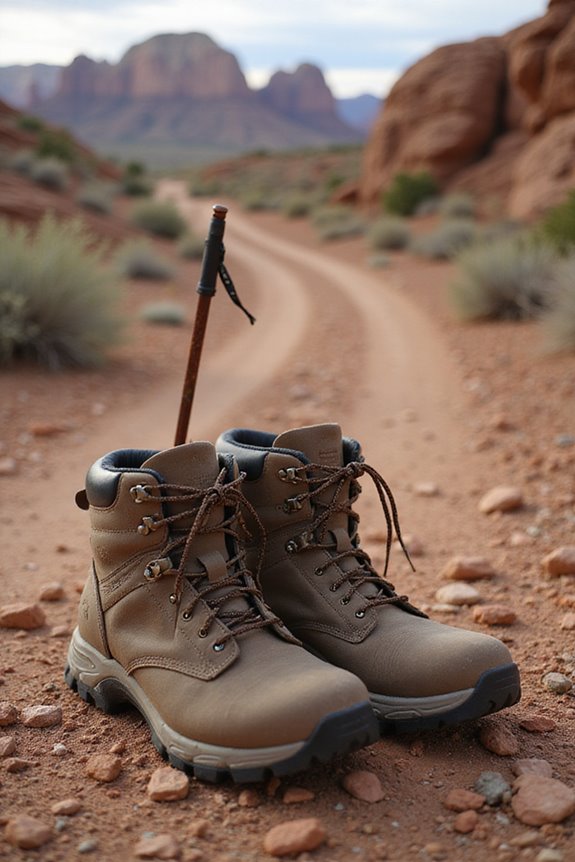
How To Choose Hiking Boots?

Choosing the right hiking boots can be a game changer for our adventures! We wanna consider boot categories based on our trails, whether it’s a lightweight model for quick day hikes or hefty ones for rugged climbs. Materials matter, too—let’s look for durable leather or breathable synthetics. Don’t forget to find the perfect fit; snug but comfy is the goal. By keeping weather conditions and terrain in mind, we can find boots that’ll have us ready for anything on the trail! Stick with us, and we’ll share even more tips!
Key Takeaways
- Assess the trail difficulty, pack weight, and weather to select between lightweight, midweight, or heavyweight boots.
- Choose materials like full-grain leather for durability or lightweight synthetics for quick drying and comfort.
- Ensure a proper fit with about a finger’s width at the heel and light toe contact before lacing.
- Look for solid ankle support and a stiff midsole for stability on rugged terrains.
- Consider waterproof features and insulation for wet or cold conditions, and ventilation for hot weather.
Understanding Hiking Boot Categories
When it comes to choosing the perfect hiking boots, the journey can feel as intimidating as a steep mountain trail! We’ve got diverse options lined up for us. Lightweight boots are ideal for quick day hikes, offering agility and comfort without sacrificing important boot features. If we’re venturing on backpacking trips, midweight boots strike a great balance between support and durability for different terrain types. Heading into rough, unpredictable routes? Heavyweight boots give us the protection and support we need for those challenging climbs. Remember, our choice should reflect the trail difficulty, our pack weight, and even the weather. Many Merrell models feature Vibram soles that provide exceptional grip on various terrains for added safety and performance. So let’s find that perfect fit and embrace the adventure waiting ahead! Happy trails await!
Recommended Products
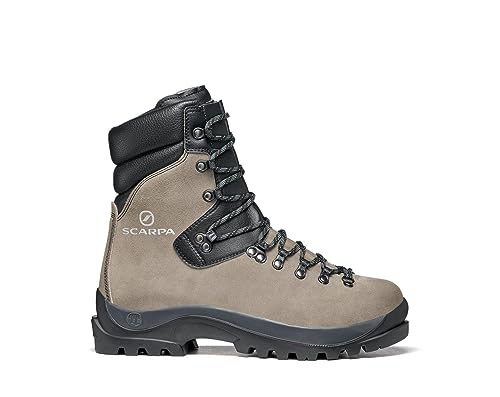
EU Size: 42.5 – US Size: 10-10.5 Women/9-9.5 Men | Rugged and Reliable | Made for a wide variety of alpine applications, the Fuego is durable enough to handle everyday use in any discipline, from hiking to wildland firefighting.

Waterproof membrane seals out water and lets moisture escape Pigskin leather and mesh upper 100% recycled laces and webbing Bellows tongue keeps out debris Protective toe cap 100% recycled mesh lining Kinetic Fit ADVANCED removable contoured insole with reinforced heel cushioning for medium support Molded nylon arch shankLightweight EVA foam midsole for stability and comfort Vibram TC5+ rubber sole

Lightweight trekking boots for men made from robust suede with Gore-Tex lining, for alpine tours
Exploring Materials and Construction Options
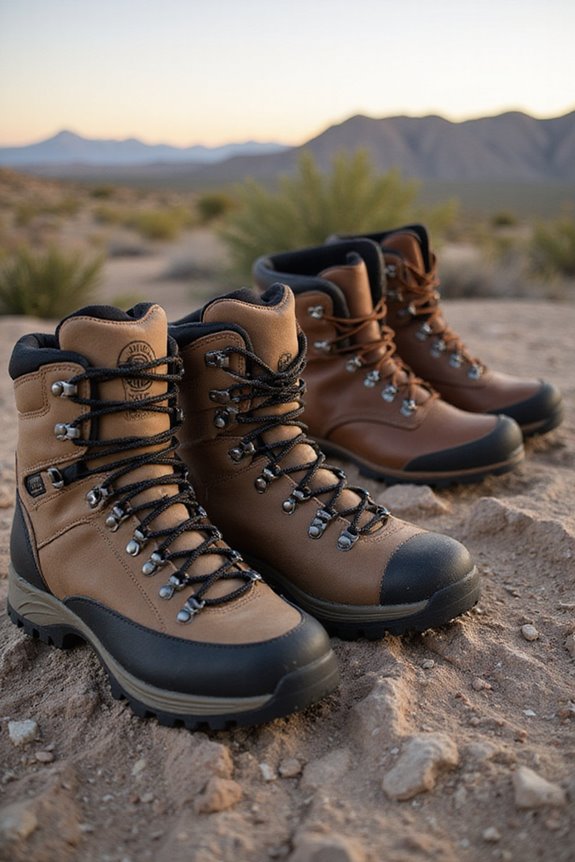
As we explore the world of hiking boot materials and construction, it’s easy to feel overwhelmed by the options—don’t worry, we’ve got this! From full-grain leather for durability to lightweight synthetics that dry quickly, each material has its own benefits. We love the balance of breathability and support that dual-density midsoles offer, while sticky rubber outsoles grip varied terrain like a pro. For winter hiking specifically, look for boots with seam-sealed membranes that provide superior waterproofing while maintaining breathability. When it comes to construction methods, we can’t ignore the Goodyear welt for its resoling potential and added durability, though cement methods can save weight. We’ve found that understanding these material benefits and construction choices lets us choose boots that feel like an extension of our adventurous spirit, ready to tackle the great outdoors!
Ensuring Proper Fit and Comfort
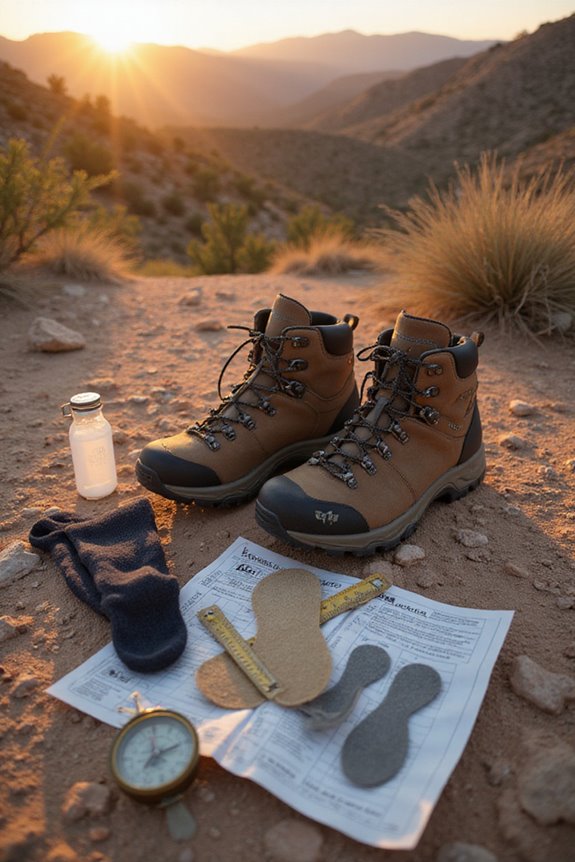
How do we make certain our hiking boots fit like a dream? First, we’ve gotta nail that fit assessment! When we stand tall, there should be about a finger’s width between our heel and the back of the boot. Make certain our toes lightly touch the end before lacing—this helps avoid any unwanted movement while we conquer those trails!
Now, let’s talk about comfort evaluation; we want snug without the squeeze! Wiggle those toes and make sure there’s no pinching. Many experts recommend sizing up half-size when purchasing hiking boots to accommodate thicker socks and foot swelling during long hikes. Remember to try our boots with the socks we plan to hike in, preferably synthetic for moisture control. If we can’t wait to hit the trails, testing them indoors really helps us catch discomfort before heading outside. Freedom awaits—let’s choose wisely!
Recommended Products

Waterproof Build: These men’s hiking boots feature a waterproof membrane construction that keeps your feet dry when trudging through any mud or water.

CLASSIC DESIGN: Premium synthetic leather with fashion plaid pattern fabric, classic double color lace with antique brass metal eyelet, padded collar lets this boots never out of time.

Lightweight & Cushioned: For prolonged standing during activities, these tactical boots feature a thickened MD midsole to diminish impact when hitting the ground. Their lightweight design also makes walking easier.
Evaluating Support and Stability
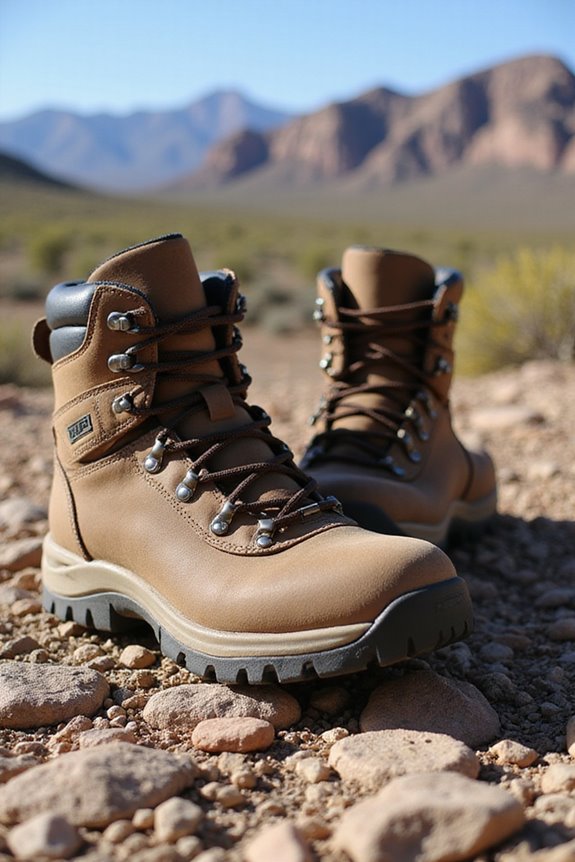
Evaluating support and stability in our hiking boots is essential, especially if we want to tackle those trails with confidence and avoid any unexpected tumbles! We all know that feeling of wobbly ankles on rocky paths. Look for boots with solid ankle support; those higher collars can mean the difference between a sprain and a smooth hike.
Now, let’s chat about midsole stiffness. A stiffer midsole helps reduce heel drop when climbing, which cuts down on calf fatigue—who doesn’t want that on a long trek? If we’re heading into rugged terrain, choosing boots with a rigid shank and supportive heel counters is key. Trust us, your feet will thank you after that trek! So let’s make those trails feel like a walk in the park! Consider models like the Oboz Sawtooth X Mid which features Adaptive Cushioning Technology that provides excellent support while maintaining comfort on various terrains.
Recommended Products

LASTING COMFORT - Our women's hiking boots have a durable rubber sole that provides greater comfort, which reduces foot fatigue as you traverse over thick roots and rocks. Padded tongue & ankle for extra cushioning and all-day comfort.
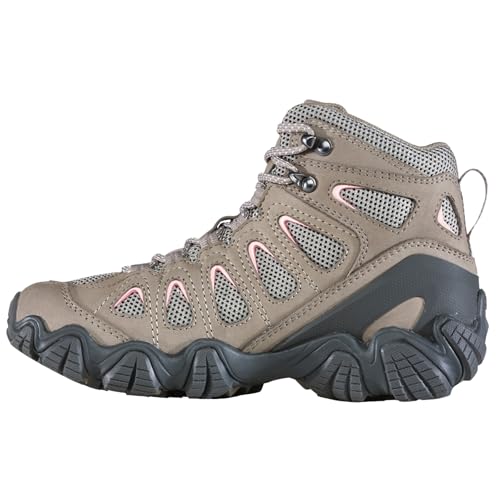
Our proprietary insole is what we’re known for. Molded to match the specific shape and construction of every pair we make, this purpose-designed technology delivers the kind of fit, feel and performance that’s unmatched in the industry.

Comfy to Wear: These women's hiking shoes feature EVA insoles, ensuring every step is cushioned and responsive. The mesh covering enhances ventilation, keeping you comfortable even during extended walks.
Weighing Durability Against Lightweight Options
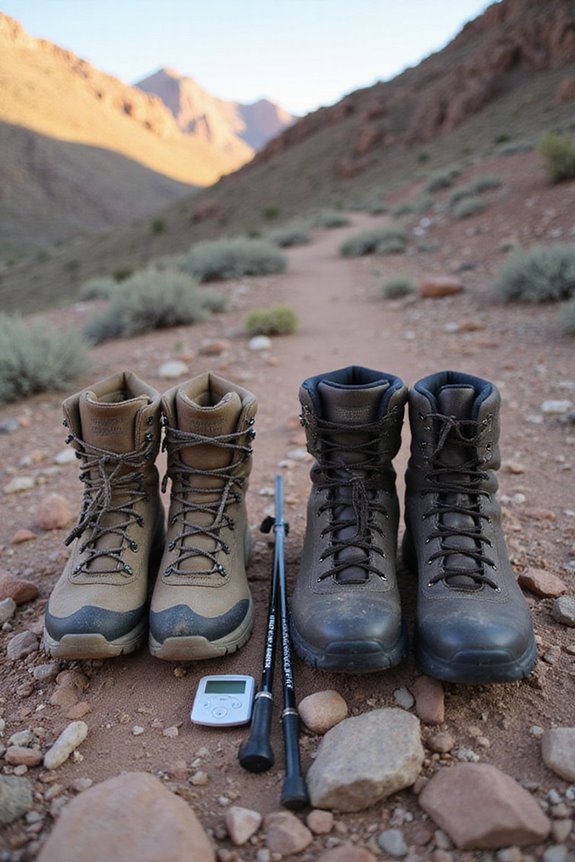
When it comes to choosing hiking boots, striking the right balance between durability and weight can feel like a tightrope walk on a narrow mountain ledge! We often face weight trade-offs: heavier boots can take a beating and offer durability, but man, they can zap our energy and lead to fatigue, especially on long hikes.
On the flip side, lightweight options can keep us agile and lively on well-maintained trails, but they might not withstand the tough, rocky paths. It’s essential to find boots that protect our feet without turning us into tired, sore hikers! When we gear up, let’s consider our adventure’s demands so we can roam freely without compromising comfort or support. Boots with SRA-level slip resistance provide enhanced safety on challenging terrains while minimizing the risk of falls. Happy trails!
Recommended Products

LASTING COMFORT - Our women's hiking boots have a durable rubber sole that provides greater comfort, which reduces foot fatigue as you traverse over thick roots and rocks. Padded tongue & ankle for extra cushioning and all-day comfort.

WATERPROOF:Mens waterproof hiking shoes HUMTTO-TEX seals out water and lets moisture escape so you stay dry when you're on the move while Cross-country hiking

Excellent Comfort: Nortiv 8 women's waterproof hiking boots use our lightweight, durable midsole, and advanced traction rubber soles, which can be slip-resistant on rugged ground. If you prefer a looser fit, consider choosing the wide toe box version.
Choosing Boots Based on Specific Use
As we lace up our boots, it’s essential to match our footwear with the kind of adventure we’re gearing up for! If we’re tackling well-maintained trails, light hiking boots offer speed and comfort without weighing us down. For multi-day backpacking with a loaded pack, we’ll want those sturdy backpacking boots with their rigid soles and great ankle support to conquer varied hiking terrain. And when the path turns snowy or rocky, let’s not forget mountaineering boots—these are our best friends for technical climbs. Whatever we choose, understanding boot features can elevate our journey, helping us embrace nature’s wild freedom! So, let’s hit those trails, knowing our feet are ready for anything!
Recommended Products

A versatile leather mountaineering and backpacking boot perfect for light-duty mountaineering, heavy hiking, and backpacking or various types of outdoor work situations where you need durable support and all-day comfort.

Konseal GTX Shoe: Waterproof approach shoe for rugged, technical terrain

A classic all-leather hiking/mountaineering boot that features an aggressive tread ensure stability and traction in rugged environments
Adjusting for Environmental Factors
While we might dream of pristine trails and perfect weather, the reality is that nature throws us curveballs, and that’s part of the adventure! When considering our hiking boots, we need to adjust for what the environment has in store. If we’re facing wet or snowy conditions, waterproof features become our best friends—look for solid membranes that keep our feet dry while letting them breathe. In colder climates, insulation types matter; cozy thermal linings can keep us warm as we tackle high altitudes. And let’s not forget about hot weather—good ventilation is key to avoiding sweaty, unhappy feet! Each terrain we encounter demands specific tread and grip, so let’s gear up accordingly and embrace whatever adventure awaits!
Tips for Testing and Breaking In Your Boots
Getting the right fit in hiking boots can be a game changer! When we’re testing our new kicks, let’s strut around our living rooms first—wear those thick hiking socks and lace ‘em securely. We’ll want to catch any pressure points ASAP to prevent blisters down the trail.
Gradually take our boots for short walks outdoors, even adding a little weight in our packs to mimic those epic day hikes.
As we break them in, let’s incorporate breaking techniques—wear ‘em often! Remember to dry them fully between uses to keep ’em fresh. Don’t forget our boot maintenance—checking the soles and waterproofing during test hikes is key. And hey, if we feel hot spots, let’s adjust before they become pain! Adventure awaits!
Frequently Asked Questions
What Are Common Mistakes People Make When Choosing Hiking Boots?
We’ve all seen folks blissfully hiking in unsuitable boots, suffering from sizing errors and terrain mismatch. It’s a wild adventure to choose poorly! Let’s guarantee we don’t join that parade of discomfort and blisters.
How Long Should Hiking Boots Last With Proper Care?
With proper maintenance, our hiking boots can last anywhere from 500 to 800 miles. By caring for them well, we guarantee their boot lifespan stretches further, allowing us to explore the great outdoors freely and comfortably.
Can I Wear Running Shoes for Hiking Instead of Boots?
Sure, we can wear running shoes for hiking on less challenging terrain. However, they lack the durability and ankle support needed for rugged trails, which could limit our freedom and comfort during more demanding hikes.
How Often Should I Replace My Hiking Boots?
We should replace our hiking boots every 2 to 3 years, considering boot lifespan and maintenance tips. Regular inspections and care can extend their life, ensuring we’re ready for our next adventure without worry.
Are There Age Recommendations for Different Types of Hiking Boots?
When it comes to youth hiking, we should consider age-specific boot features. From waterproofing for toddlers to laced designs for teens, ensuring comfort and support helps our kids embrace the freedom of the trails safely.