As an Amazon Associate, we earn from qualifying purchases. Some links may be affiliate links at no extra cost to you. Although our opinions are based on curated research, we haven't used these products. Articles generated with AI.

Tips For Hiking Socks?

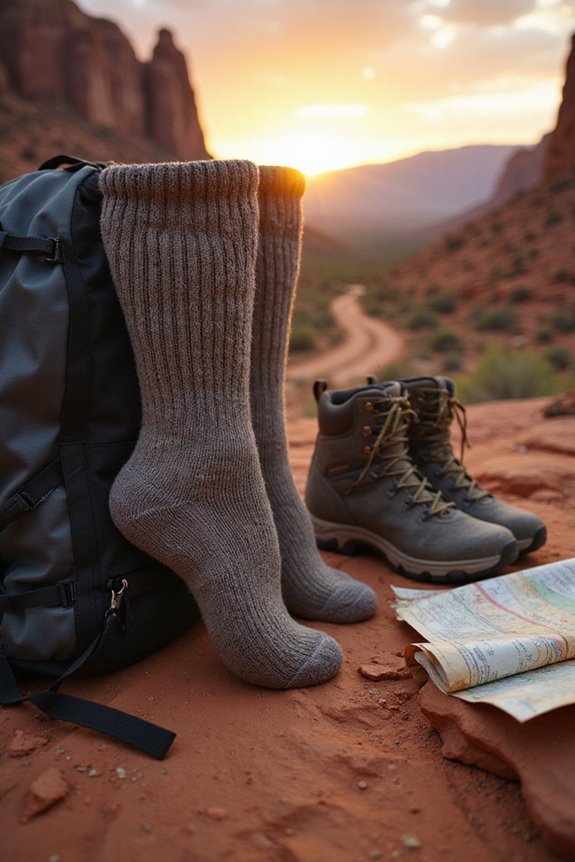
When we hit the trails, the right hiking socks are a game changer! Trust us, Merino wool keeps our feet warm and dry, while synthetic blends add durability and stretch to fight off blisters. We love a snug fit to prevent slippage and proper cushioning to keep our feet happy on long treks. And hey, don’t forget to wash them gently! Want to know more about selecting the best socks for your next adventure? Let’s keep going!
Key Takeaways
- Choose socks made from moisture-wicking materials like Merino wool or synthetic fibers to keep feet dry and reduce blister risk.
- Ensure a proper fit with snug socks that stay in place to prevent slippage and discomfort during hikes.
- Opt for socks with appropriate cushioning based on the hike’s intensity; medium or heavy cushioning absorbs shocks and adds warmth.
- Select the right sock height to provide protection and comfort, such as Crew socks for hiking boots and Shorty socks for low-rise shoes.
- Regularly inspect and maintain socks by washing with mild detergents and air drying to extend their life and performance.
Understanding Material Composition
When it comes to hitting the trails, the right socks can make or break our adventure—trust me, I’ve learned that the hard way! Understanding material blends is essential for a comfortable hike. Merino wool, for instance, is a game changer: it keeps us cozy and regulates temperature like a pro. Plus, it stays warm even when wet—who knew wool could be so versatile?
Synthetic fibers, like polyester and nylon, are also fantastic with their moisture resistance; they dry quickly and fight odor effectively. When we pair these materials with a bit of elastane for stretch, we get socks that hug our feet without causing blisters. Socks with Coolmax technology provide exceptional moisture-wicking properties that help maintain dryness and regulate temperature during extended hikes. So, let’s gear up wisely and hit those trails with confidence!
Choosing the Right Sock Height
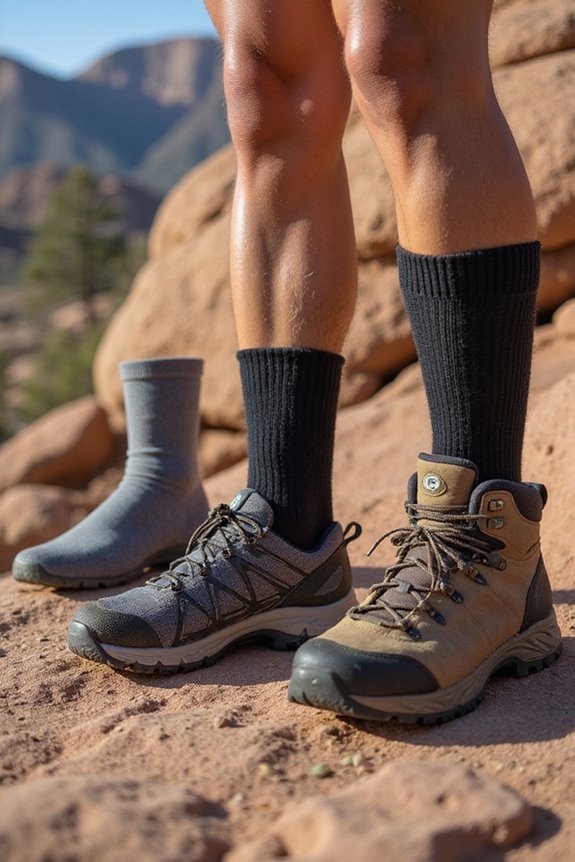
What’s the secret to a comfy hike? It starts with choosing the right sock height! We’ve all been there—itchy blisters and chafing ruin our adventure. So let’s find that sweet spot between sock height and footwear compatibility. For low-rise shoes, Shorty or Quarter socks are perfect, keeping things breezy. But with hiking boots, we’ll want Crew or taller socks for the ultimate protection against pesky rubs. If we’re trekking through dense brush, consider three-quarter or full-length socks to ward off scratches. And let’s not forget the seasons! Taller socks add warmth and shield against bugs in summer. The right sock height can be that game-changer for our next epic trail—trust us, your feet will thank you! For long-distance hiking, look for socks with reinforced areas in the heel and toe to increase durability and prevent mid-trail failures.
Recommended Products

COMPOSITION - Anlisim warm hiking socks are made of 70% Merino Wool, 23% Polyester, 5% Spandex, 2% Nylon, which are wearable and durable. They regulate the temperature and keep you warm, so you can wear them in different season.

Fabric and Quality: Made from a blend of 70% wool, 23% polyester, 5% spandex, and 2% nylon, these thermal quarter running socks ensure temperature regulation for all-season comfort. They maintain durability and shape retention even after repeated wear and washing. The breathable mesh offers effective moisture-wicking to keep feet dry and airy during intense movement

Soft Breathable Moisture Control Fibers
The Importance of Cushioning
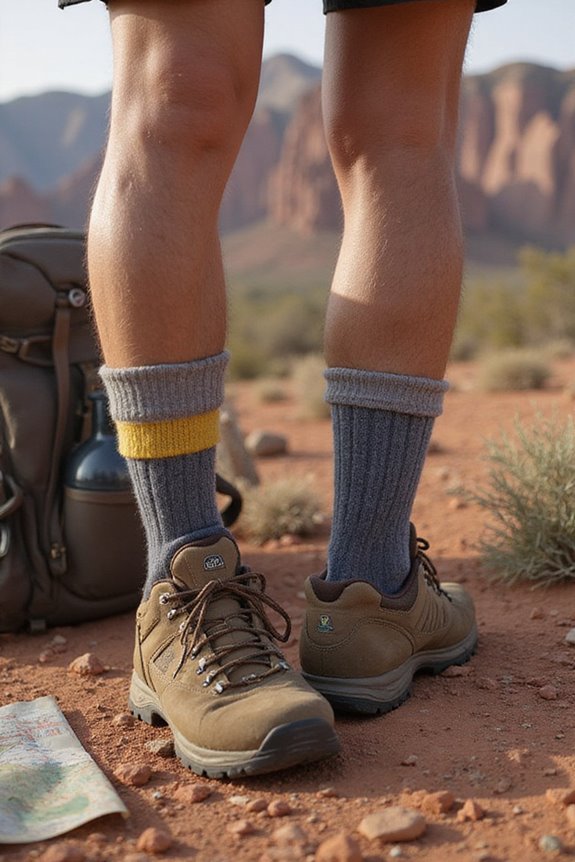
Cushioning in our hiking socks is like the marshmallow in a s’more—essential for comfort and delight on the trail! It’s all about those cushioning benefits, folks. The right level of cushion can absorb shocks and reduce foot fatigue as we tackle rocky paths. Imagine this: medium cushioning distributes pressure evenly across our heels and balls, making those longer hikes a breeze!
We find that heavy cushioning is perfect for chilly days when we need extra warmth, while light cushioning keeps us breezy on hotter adventures. With the right cushioning distribution, we not only enhance our comfort but also improve boot fit—reducing blisters during our epic treks! Let’s embrace the squishiness that keeps our feet dancing on the trail! Some brands like Gonii offer excellent arch support options that complement cushioning to further prevent foot fatigue on demanding trails.
Recommended Products

Outdoor Hiking Socks: Merino wool hiking socks for men and women built for year-round trekking and outdoor work, ideal for hikers and outdoor enthusiasts who want heavy-duty protection for long days outside

Merino Wool & Ultra Comfort: Made of merino wool blend ensures your feet will be fresh in summer and warm in winter due to moisture wicking technology. Soft handle, strong warmth retention and moisture absorption make your feet comfortable all day
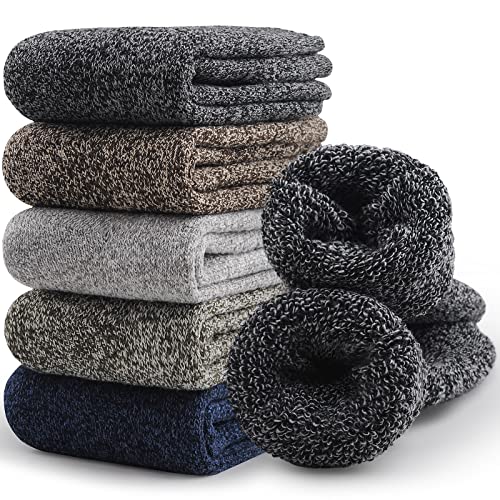
[HIGH QUALITY MATERIAL]: These mens socks are knitted with good quality merino wool, nylon and spandex for high elasticity and lots of softness. Feel soft and comfy after you get your feet in. Hiking socks men have a great relief of foot pressure.
Effective Moisture Management
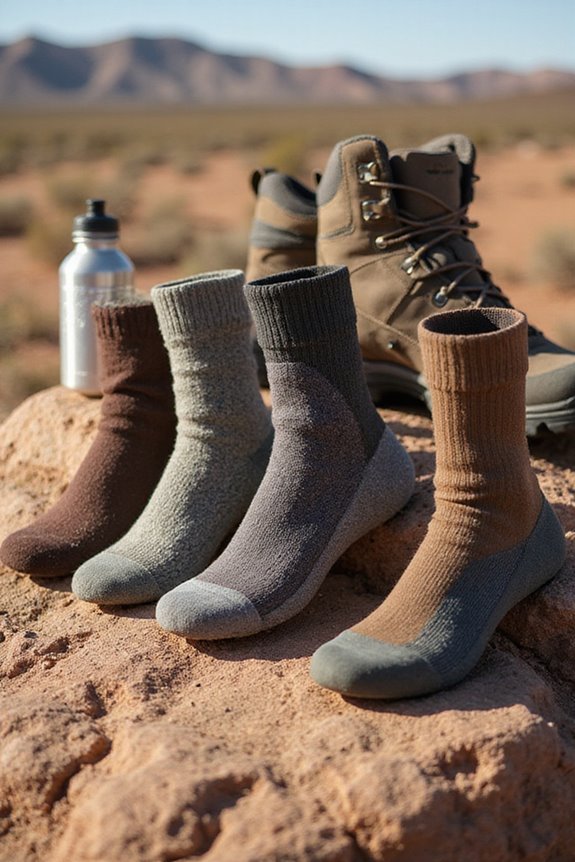
To keep our feet happy and dry on the trail, effective moisture management is a must! When we hike, sweat is inevitable. That’s where moisture prevention techniques come into play. We love merino wool for its natural wicking performance; it pulls moisture away quickly while resisting odors. Adding synthetic fibers like nylon boosts durability and speeds up drying time—perfect for those sudden downpours!
We should stick to designs with toe separation and snug fits; they minimize friction and wick sweat efficiently. Let’s face it: nobody wants a soggy sock disaster. Avoiding cotton socks is essential for preventing painful blisters during long hikes with Merrell boots. So, next time we hit the trail, let’s choose socks carefully based on wicking performance analysis. Our feet will thank us, leaving us free to explore more trails!
Recommended Products

Composition:Anlisim womens hiking socks are made of 70% Merino Wool, 23% Polyester, 5% Spandex , 2% Nylon,which are wearable and durable.And you can wear them in all season.

Comfortable Merino Wool: Hiking socks women feature a merino wool blend fabric that feels soft against the skin; The stretchy material hugs your feet while remaining thick yet breathable, keeping your feet warm and cozy

THERMOREGULATING: The hiking socks for men are made from ultra-soft Merino wool blend for comfort and spandex for durability. Featuring thermoregulation that keeps you warm when it's cool in winter and stays cool when it's hot weather in summer, great for all-season wearing.
Techniques for Odor Control
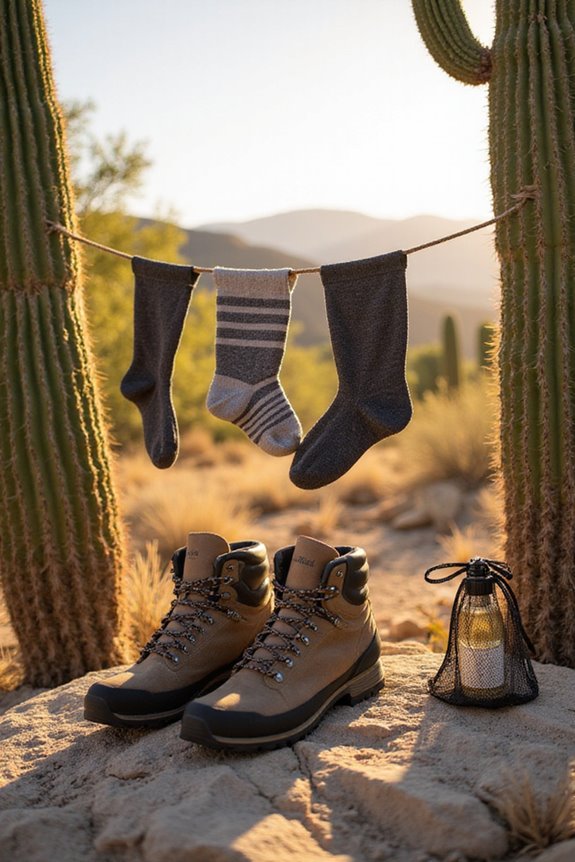
The quest for odor-free hiking socks can feel like searching for a unicorn—rare and just a bit magical! But don’t worry; we’ve got some tricks up our sleeves. First, let’s talk sock rotation. By switching out pairs throughout our hikes, we minimize moisture retention and prevent those pesky odors from building up. Using materials like merino wool or antibacterial-treated socks can make a world of difference in bacteria prevention!
And don’t underestimate the power of good maintenance—washing our socks regularly (a soak in vinegar helps!) keeps them smelling fresh. We should also choose high socks for better airflow and drying. The natural properties of wool are particularly effective at combating odors even after multiple days on the trail. Trust us, a little effort in odor control lets us focus on enjoying the trails rather than worrying about our feet!
Durability Considerations
While we all love the thrill of hitting the trails, let’s face it: choosing durable hiking socks is just as important as picking the right boots! Trust us, folks, when we say that quality fibers like fine Merino wool really amp up sock durability. The magic happens in the construction quality; high needle counts create dense, strong knits that resist fiber wear like a champ! Plus, a blend of durable synthetics, including nylon, adds extra strength against tearing.
Imagine trudging through rough terrain without worrying about your socks giving up! Thicker socks offer more cushioning and support, keeping us comfortable and our socks lasting longer. So let’s gear up for our next adventure with confidence in our durable hiking socks!
Proper Care and Maintenance
Even though it might seem like a hassle at first, taking care of our hiking socks can make all the difference on the trails! We’ve learned that employing the right washing techniques is essential—using mild, fragrance-free detergents and avoiding fabric softeners keeps our socks in top shape. Turning them inside out before washing helps, too!
For drying methods, let’s embrace air drying or line drying to maintain their integrity. If we must tumble dry, do it on low heat. A little care goes a long way: shaking out dirt and airing socks can minimize odors, and inspecting for damage prevents problems later. Let’s keep our socks happy, so they can keep us happy out there!
Fit and Sizing Tips
Finding the right fit for hiking socks can feel like searching for a needle in a haystack, but trust us, it’s worth the effort! First up, let’s think about sock thickness. Thicker socks provide warmth, but they need to fit snugly with our boots. We’ve gotta pay attention to our foot shape, too—socks shouldn’t be tight enough to cut off circulation, but they must stay put to avoid uncomfortable bunching.
When shopping, try socks on with our boots, because nothing feels worse than a surprise blister mid-hike! Finally, remember that brands differ in sizing. Measuring our foot length beforehand can save us from making a sock-related disaster. Happy hiking, everyone—let’s keep those feet comfy and ready to roam free!
Recommended Products

Soft Breathable Moisture Control Fibers

ALL-SEASON PERFORMANCE: These merino wool hiking socks regulate temperature in any season, keeping feet cool in summer and warm in fall; they wick away sweat, dry quickly, and resist odors so your feet stay fresh and comfortable on rocky trails, camping trips, or long travel days

Ankle Tuck Compression: IRAMY Compression Socks combine advanced air knitting technology with 6 targeted compression rings for optimal ankle and arch support. The even pressure around the ankle relieves swelling, reduces muscle fatigue, and alleviates discomfort from plantar fasciitis, helping you stay active and pain-free throughout the day.
When to Replace Your Hiking Socks
When we’ve pounded the trails, we need to pay attention to our trusty hiking socks—they’ve been working hard for us, after all! If we start spotting holes or thinning sections, especially on the heel and ball, it’s a clear sign they’re nearing the end of their sock lifespan. Got a bad odor that even washing can’t shake? Time for a replacement! Socks that sag or don’t fit snugly can lead to blisters on those epic adventures. For heavy hiking, we may need to replace them more often—think every couple of hikes. So, let’s build a rotation of several pairs, keeping our foot health in check. After all, no one wants to hike with soggy, worn-out socks!
Special Features to Look For
Sure, there are a few key features that can make or break your hiking sock experience, and we’re here to share the essentials! First off, look for reinforcement zones at the toe and heel. We all know those areas can feel the grind, right? Extra padding there makes a huge difference!
Next, let’s talk thermal insulation. Merino wool is an excellent pick for keeping your feet cozy in cool weather and cool when it’s hot. Plus, moisture-wicking materials help keep sweat at bay, which is vital for long hikes—no one likes blisters!
Finally, don’t underestimate the power of a proper fit. A snug sock is essential to avoid unwanted slippage when maneuvering those rocky trails. Happy hiking!
Frequently Asked Questions
Can I Wear Two Pairs of Socks for Extra Cushioning?
Absolutely, we can wear two pairs of socks for extra cushioning and warmth. They improve moisture management too, keeping our feet dry and comfy, which makes our hiking adventures more enjoyable and liberating.
What Color Socks Are Best for Hiking?
When choosing sock color for hiking, we should consider visibility factors and sock color psychology. Bright hues enhance safety, while darker shades hide dirt. Ultimately, let’s balance practicality and personal style for our adventures!
Should Hiking Socks Be Washed Before First Use?
Should hiking socks be washed before first use? Absolutely! The pre-wash benefits enhance comfort and hygiene for any sock material. We don’t want to start our adventures with irritation; let’s embrace cleanliness and freedom!
How Long Should a Good Pair of Hiking Socks Last?
When we think about how long a good pair of hiking socks should last, durability factors and material types play key roles. Quality merino wool or alpaca blends can guarantee they serve us reliably for years.
Are There Specific Socks for Different Hiking Seasons?
Did you know over 70% of hikers experience foot issues due to improper sock choices? We believe selecting socks based on seasonal materials and temperature considerations can elevate our outdoor freedom and comfort tremendously.